You have twelve matches, each one unit long. Laid end to end on a table and
joined only at their tips, they can enclose a polygon - for example a 3x3 square with an area of 9, or a “plus sign” shape with area of 5.
Using all twelve matches (each lying flat and full length, no breaking or
overlapping), arrange them into a closed figure that encloses an area of exactly
4 square units.
My solution
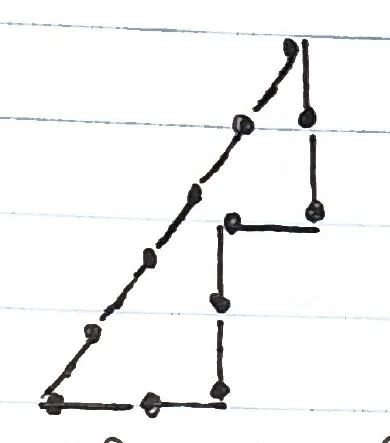
Yes, multiple ways. The neatest I found was like this:
You can see it’s formed after a 3-4-5 right triangle, which has area (3×4)/2=6. So, if we “invert” the 3 matchsticks in the corner, we reduce the area by a rectangle of area 1×2=2, for a total area of 6−2=4
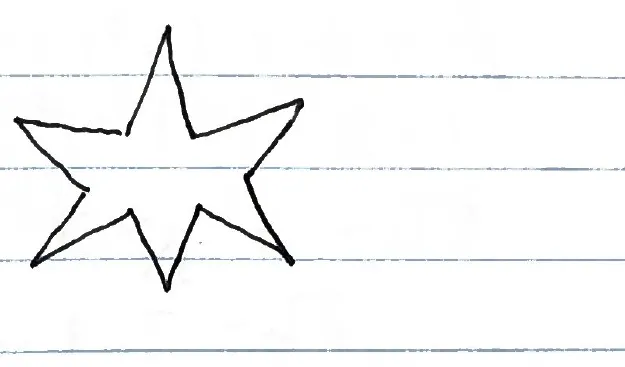
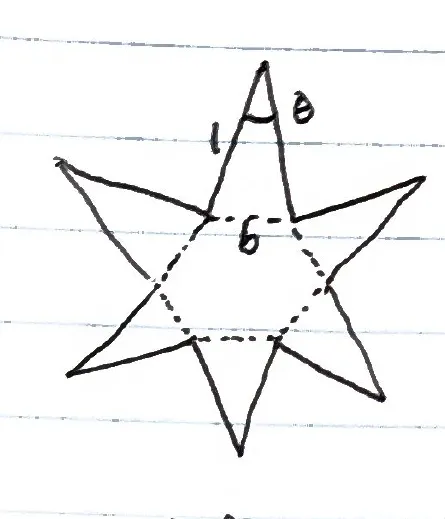
However, you can also achieve a shape with any area from 0 up to the area of the unit side-length dodecagon (which I believe is the maximum, ∼11.196) This can be shown with the fact you can make a 6-pointed star like so:
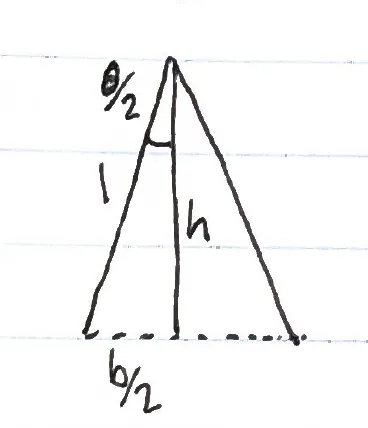
By varying the angle of the star’s “points” you get a shape which continuously changes from one with an area as near to 0 as you desire into the regular dodecagon, achieving all areas continuously in between. In fact, the function which gives the angle needed for a desired area is: